
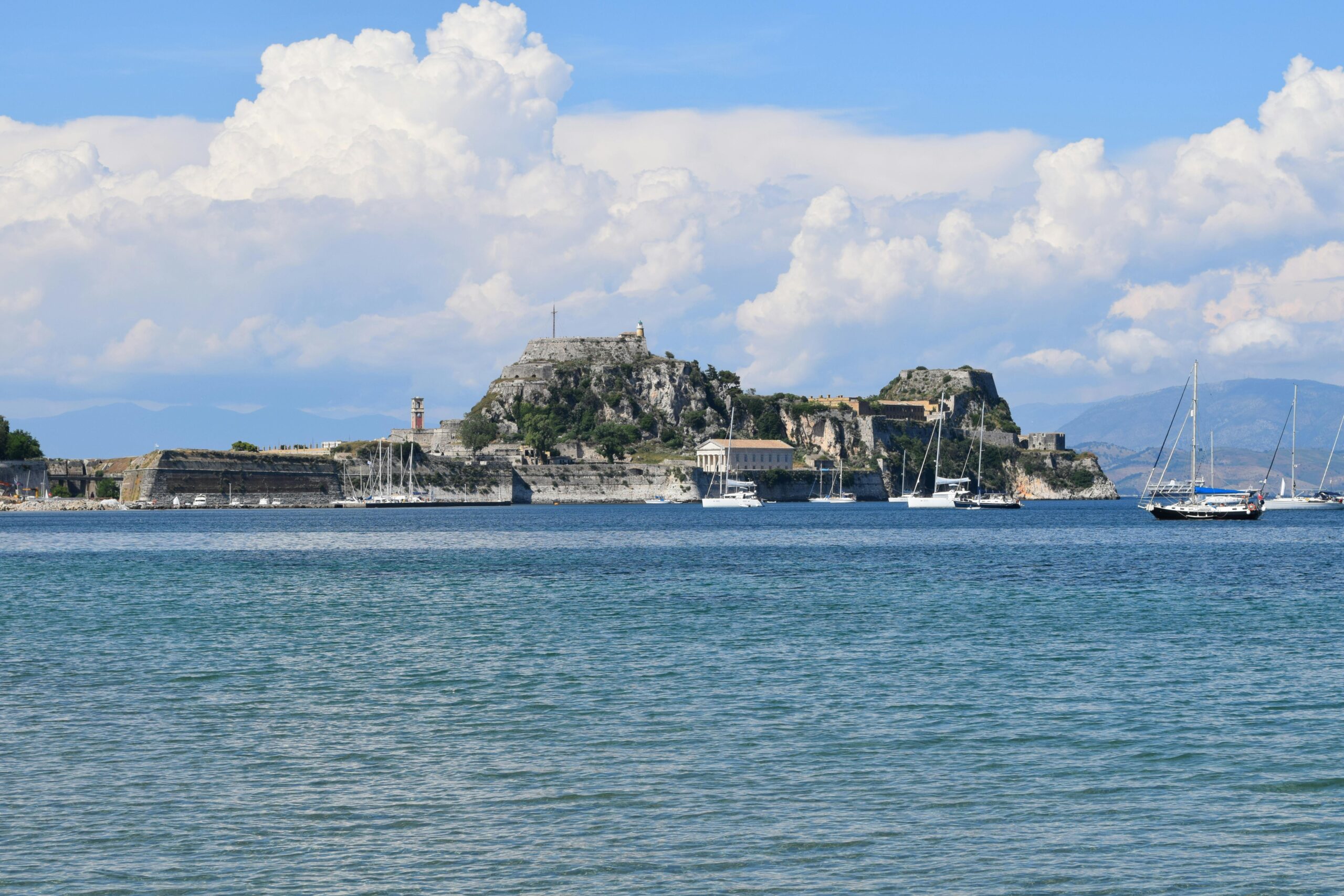
Somewhere in the distance, waves strike the harbor wall while an old radio plays forgotten music from another decade. A fisherman crosses the stage carrying a lantern. A woman waits beneath a balcony covered in bougainvillea. Nothing dramatic has happened yet, and yet the audience already feels it: something is about to change.
The play unfolds over a single summer night in Corfu. Not the postcard version tourists expect, but the quieter island that appears after midnight — narrow streets echoing with footsteps, cafés half-empty, old stories lingering in the warm air. The central character, Andreas, returns to the island after years abroad to sell his late father’s house. What begins as a practical decision slowly transforms into a confrontation with memory, identity, and the strange emotional gravity of places we believe we have left behind.
Each act reveals another layer of the island itself. Corfu becomes less a setting and more a living character: unpredictable, nostalgic, theatrical. Conversations drift between humor and melancholy with Mediterranean ease. A retired actress recalls performing Shakespeare in a rainstorm near the Old Fortress. A taxi driver philosophizes about loneliness while smoking beneath a streetlamp. A café owner insists that nobody truly leaves the island — they only spend time away from it.
The visual language of the production mirrors Corfu’s contrasts. Venetian architecture stands beside fading neon lights. Elegant aristocratic memories collide with ordinary island routines. Music flows continuously through the scenes: distant mandolins, church bells, late-night conversations, the sea itself becoming part of the sound design.
As the play progresses, Andreas slowly abandons his original plan. Instead of escaping quickly, he begins wandering through villages, coastlines, and forgotten family spaces. The audience realizes that movement itself has become symbolic — every road revealing another emotional crossroads. Corfu is portrayed not as a static destination, but as an island that changes people through atmosphere rather than spectacle.
In the final scene, dawn begins to break over the harbor. Andreas stands alone near the waterfront as the first light touches the old stone buildings. Nothing has been entirely resolved, yet everything feels different. The island remains suspended between past and future, memory and movement, departure and return.
And perhaps that is the essence of Corfu itself: a place best understood slowly, through detours, conversations, and the freedom to explore beyond fixed itineraries — something every traveler eventually discovers through corfu car rental.