
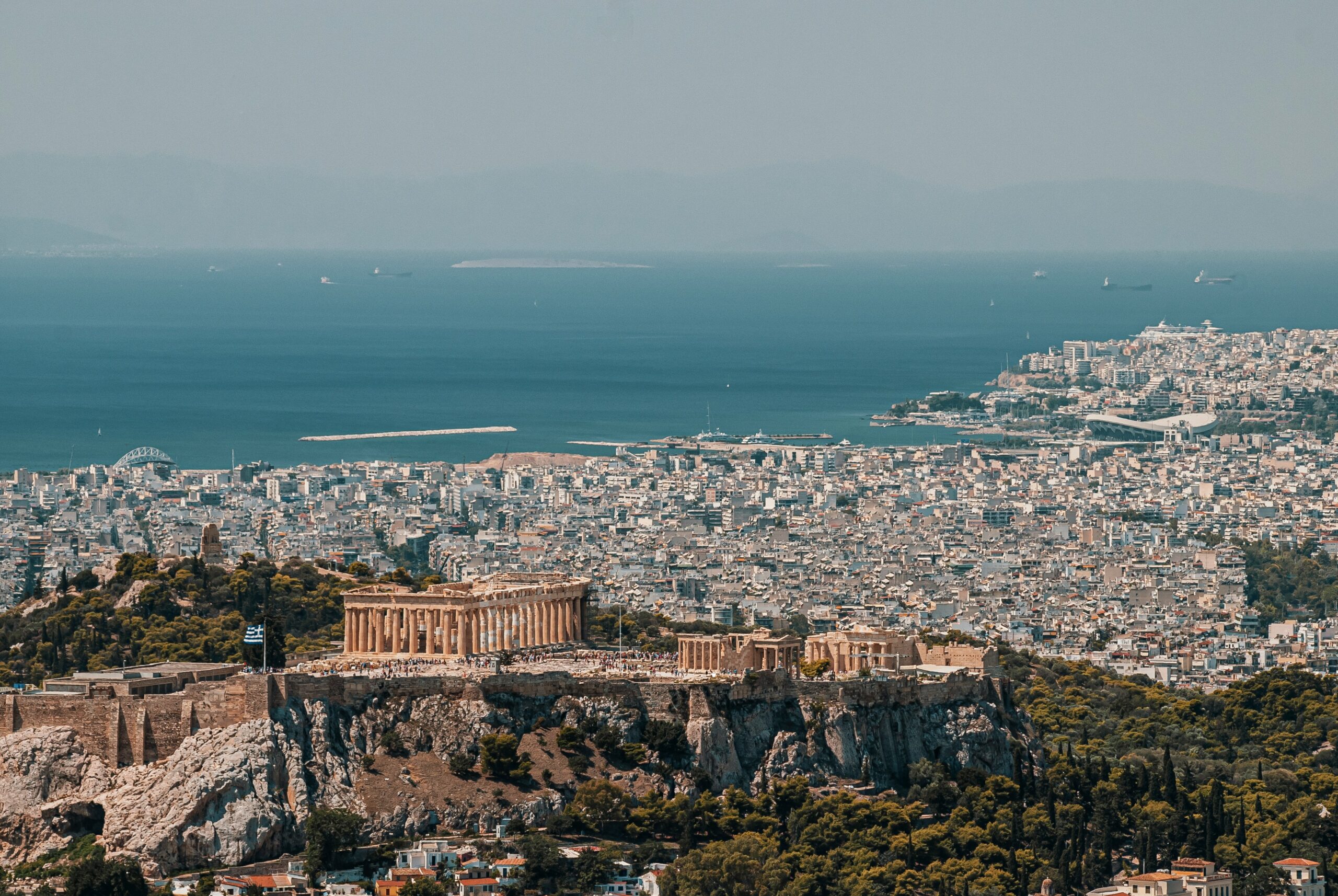
Athens has always been more than a backdrop in cinema. It is a living presence, a city where marble and shadow coexist, where ancient columns watch modern lives unfold. Few films have captured this duality as powerfully as Before Midnight (2013), the final chapter of Richard Linklater’s celebrated trilogy.
Though much of the story unfolds across the Peloponnese, its emotional gravity is deeply rooted in Athens—a city that becomes a quiet witness to love, time, and the choices that shape a life. In the film, Jesse and Céline wander through Greece at a stage of life when romance has matured into reflection. Athens, visible in fragments and philosophy rather than postcard shots, represents permanence. It is not a city of beginnings but of decisions. This is where ideals meet reality, where passion confronts responsibility. The Acropolis does not dominate the frame, yet its presence is felt—timeless, indifferent, reminding the characters that everything human is fleeting.
Cinema has long portrayed Athens as a city that demands introspection. From Zorba the Greek to contemporary European productions, directors use the capital not for spectacle but for meaning. The stone streets, the sun-bleached balconies, the cafés filled with quiet conversations all serve as symbols of continuity. In Before Midnight, Athens is not romanticized; it is respected. The city frames the dialogue, allowing silence to speak as loudly as words.
This cinematic Athens has begun to mirror real life in unexpected ways. In recent years, the city has attracted not only filmmakers and artists but also international investors, professionals, and families seeking stability within history. The rise of the greek golden visa program has brought a new narrative to Athens—one that echoes the themes of the film itself. People arrive not chasing novelty, but permanence. They are drawn to the idea of building a life where culture, safety, and long-term value coexist.
Just as Jesse and Céline confront the weight of staying rather than leaving, many newcomers to Athens are making deliberate choices. They invest in neighborhoods where neoclassical buildings meet modern living, where mornings begin with coffee under orange trees and evenings end with conversations that stretch late into the night. This is not transient tourism; it is cinematic realism translated into everyday life.
Athens, as portrayed in film, teaches patience. It shows that love evolves, cities endure, and meaning is found in layers rather than moments. This is precisely why the city continues to inspire directors and audiences alike. It does not shout. It listens. It waits.
In the end, Before Midnight leaves viewers with an unresolved tension—much like Athens itself. The city does not offer easy answers. Instead, it offers space to reflect, to commit, and to stay. Whether through cinema or contemporary life decisions, Athens remains a place where stories do not end. They deepen.
And perhaps that is why Athens continues to attract those ready to write a new chapter—not as visitors, but as participants in a story that has been unfolding for thousands of years.